Moss as a Weaver of Memories
How, in Colombia, do we remember the armed conflict?
How, in Colombia, do we remember the armed conflict?
I was twelve years old when my brother became one of the victims of the mass kidnapping at km 18 on the Cali–Buenaventura highway (Colombia). It was an ordinary Sunday. We were coming back from Jamundí. My father was driving his white two-door Chevrolet pickup truck, my mother was sitting by the other window, and I was in the middle. When you're twelve, you fit anywhere. We stopped to buy chicken, part of our Sunday evening ritual after spending the day with other people from Santuario, the town in eastern Antioquia where my parents were born. We got out of the car. It was already dark. The 7 p.m. news was on, and then it appeared... kidnapping at km 18 on the Cali–Buenaventura highway. With the witch's intuition I had always had, I thought: What if my brother is there? We got back into the car with the chicken and drove home to eat.
In 2015, when I was twenty-seven years old—and had already been living in the United States for nine years—I was sitting in my living room with my roommate when Solo le pido a Dios by Mercedes Sosa began to play. I said, "This song reminds me of my brother's kidnapping," and he replied, "Your brother was kidnapped?" At that moment, I realized I had buried that memory deep in my unconscious. I had never spoken about my brother's kidnapping.
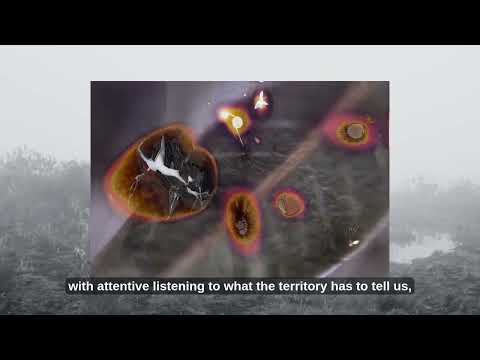
El Caballero del Páramo was born from that memory returning. It is a visual narrative that addresses my brother's kidnapping, an event that left an indelible mark on my family and serves as the starting point for a broader reflection on historical memory and environmental conservation. Through documentary photographs of the Colombian páramos, manipulated images, magazine clippings, and photographs from my family archive, the work establishes a symbolic parallel between the earth and the self.
During the kidnapping, the hostages were forced to cross the páramos for forty-two days, involuntarily becoming part of their history. The conditions of captivity were precarious. They had neither food nor water and slept in shelters made from plastic bags, on burlap sacks, enduring hostile conditions. During the journey through the mountains, they crossed forests and páramos until they reached the Naya River, near the Colombian Pacific.
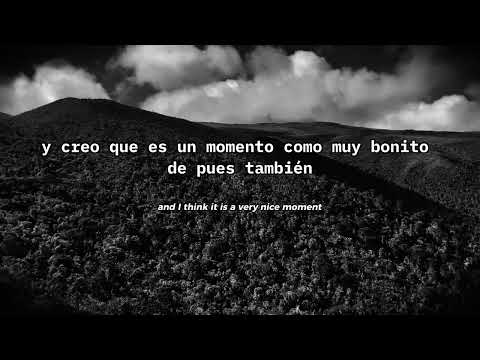
The páramo is full of vegetation, frailejones, and wetlands, all of them fundamental to the ecosystem and Colombia's water resources. Moss forms an extensive network that covers the páramo and serves as a bridge between different types of vegetation. It also absorbs and retains water, releasing it slowly and sustaining the balance of the ecosystem. During the kidnapping, moss became a vital resource and, over time, also took on a leading role in this work.
A few days after my brother was released, we gathered at home, and he told us the stories of those days in captivity. I remember him talking about the moss. About how, at one point, they had gone several days without eating because the army was so close that they could not stop to look for food. They had only what the guerrillas carried in their backpacks—non-perishable food, rice, for example. What my brother described stayed with me. They used their shirts to squeeze water from the moss so they could cook rice, rice stained by the color of the earth that they ate anyway. Years later, another kidnapping survivor told me they also used the moss as a mattress while sleeping on burlap sacks, and that it helped them clean the dirt from their bodies after days without being able to bathe.
The relationship between human beings and the land is intrinsic, yet it is often overlooked in the context of the armed conflict. Besides being essential ecosystems for water regulation, the páramos have been silent witnesses to violence in Colombia. Through this work, I seek to explore that connection between memory, territory, and resilience. I am interested in thinking about the interdependence between human beings and the páramos from an artistic perspective. The páramos not only sustain life through water; they also absorb and preserve history.
The way the páramo sustains life also offers a way of thinking about the armed conflict. Just as the roots of a frailejón intertwine beneath the páramo soil, creating an interdependent network that sustains the ecosystem, the impact of the armed conflict extends throughout the country, indirectly affecting many more people than those directly involved. When one area of the soil is damaged, other roots and plants in the region suffer as well. In the same way, violence and suffering are not limited to the direct victims; they spread to families, communities, and the nation as a whole.
I began to think of moss as a living archive. Although it is not part of official memory, nor recorded in newspapers, state documents, museums, or historical archives, moss is part of a history lived with intensity—a history that inhabits the bodies of families and the territory itself. An archive that preserves not documents, but traces. One that holds a memory living in silences, in what remains unspoken, and in everything that has been lived, even if it has never been named.