Painting the Silence of the Frailejón
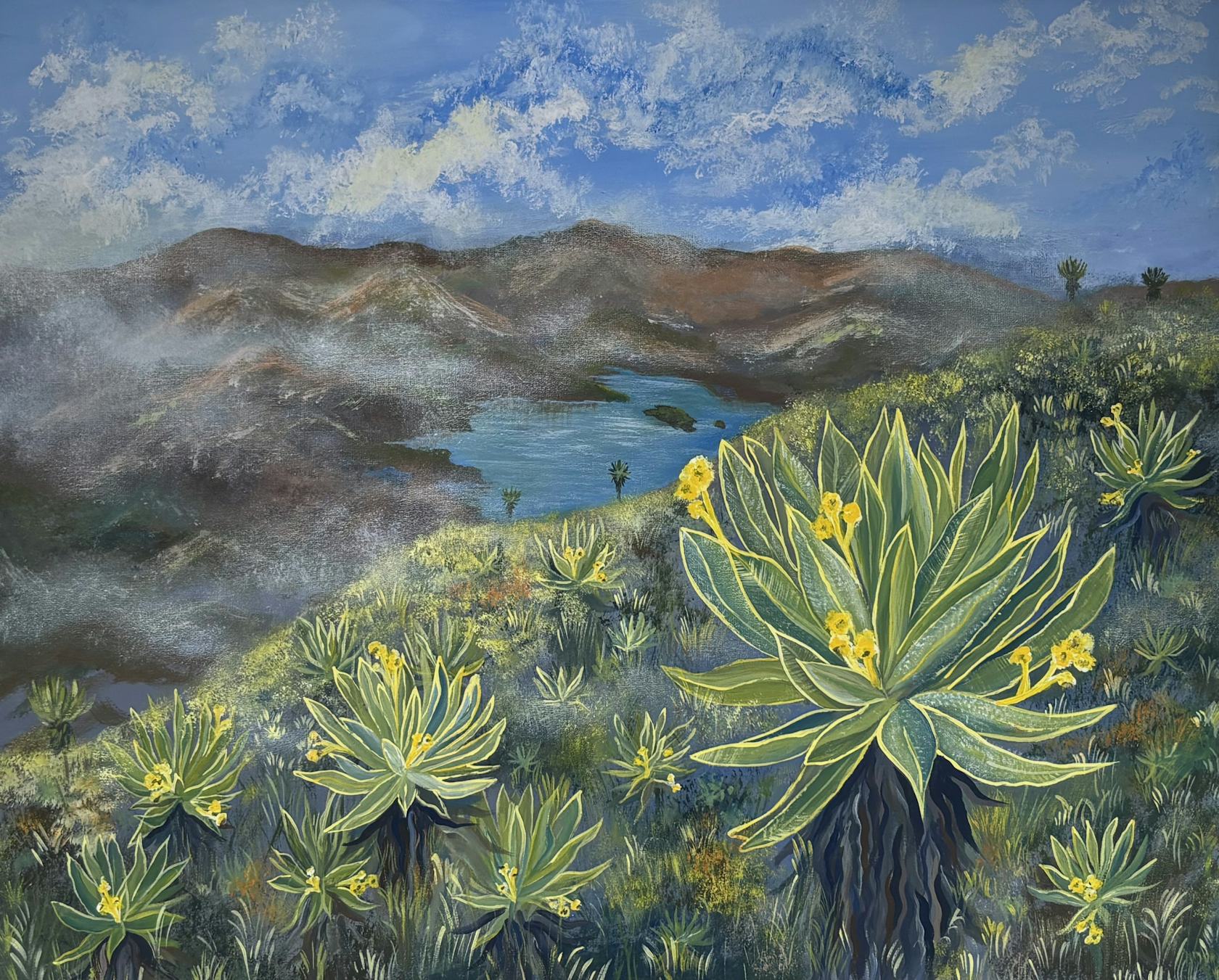
“There is a silence in the páramo that can feel overwhelming
“There is a silence in the páramo that can feel overwhelming
The day I first encountered a frailejón, I felt so small; I wondered why I had never seen one before, why no one had ever told me about its immensity. From that moment on, I made them my muse, the source of life for my creative process. This work is born from the heart and from the desire for their greatness to be seen and felt.
I love painting the páramos; while I was doing so, I could imagine the mist and feel the silence. I could spend hours without noticing, focused on every detail of the frailejón; I can feel that I am there.”
— Isabella García Sepúlveda
In the high regions of the páramo, where mist covers the mountains most of the time and the landscape is accompanied by silence, the frailejones (Espeletias) are the plants that give this landscape its shape.
Nothing here happens quickly. The frailejón has the patience to exist for one to three centuries and grows at around one centimeter per year. Slowly, it spreads across the valleys and plains of the páramo year after year, decade after decade, until it completely changes the texture and color of the mountains.
Its leaves are long, soft, and fuzzy; its trunks, covered in layers of dry, dead leaves, protect it from the cold at night and from intense radiation during the day. Its extraordinary structure allows it to store up to 25 times its own weight in water.
“The wind roars harshly again each day, the cold tries to tear its leaves, the sun will try to scorch it, and time to bend its stalk. But the frailejón will remain there as guardian of the heights.”¹
But the frailejón does not merely inhabit the páramo; it makes it possible and sustains it. Moisture in the air is captured by its leaves. The plant retains that moisture and slowly guides it into the soil. In this way, through the frailejón’s silent process, rivers are born in the high mountains. Such as the river Bogotá, Guatiquía, Gachetá, Humea, Guacavía, Chivor, and Negro, which feed the country’s most important river systems, the Orinoco and the Magdalena-Cauca.
Thus, the frailejón not only sustains the páramo itself, but also, for example, the inhabitants of Bogotá: 80% of the cities water supply depends on the water produced in the Chingaza páramo.
In its humility and silence, the frailejón is hence a being that embodies the essence of the páramo itself, it is the gaze of the peasants who work the land to sustain our contemporary society; it is an icon of resistance, care, and patience.
Pintando el silencio del frailejón
“Hay un silencio en el páramo que puede llegar a ser arrollador. El día que conocí un frailejón me sentí tan pequeña; me pregunté por qué no lo había conocido antes, por qué nadie me había hablado de su inmensidad. Desde ese momento, los convertí en mi musa, en la fuente de vida de mi proceso creativo. Esta obra nace desde el corazón y desde el deseo de que su grandeza sea vista y sentida.
Amo pintar los páramos; mientras lo hacía, podía imaginar la neblina y sentir el silencio. Podía pasar horas sin notarlo, concentrada en cada detalle del frailejón, puedo sentir que estoy ahí.”
— Isabella García Sepúlveda
En las alturas del páramo, donde la niebla cubre las montañas la mayor parte del tiempo, y el paisaje está acompañado de silencio; los frailejones (Espeletias) son las plantas que dan la forma a este paisaje.
Nada aquí ocurre rápidamente. El frailjeón tiene la paciencia de existir entre uno a tres siglos y crece alrededor de un centímetro por año. Lentamente, va cubriendo los valles y llanuras del páramo año tras año, década tras década hasta que cambia completamente la textura y el color de las montañas.
Sus hojas son largas, suaves y peludas, sus troncos, cubiertos de capas de hojas secas, muertas, los protegen del frío en la noche y de la radiación intensa durante el día. Su arquitectura extraordinaria les permite almacenar hasta 25 veces su propio peso en agua.
“El viento volverá a rugir duro cada día, el frío intentará rasgar sus hojas, el sol tratará de tostarlo y el tiempo de doblar su tallo. Pero el frailejón seguirá allí como guardián de las alturas.”¹
Pero el frailejón no solo habita el páramo; lo hace posible y lo sostiene. La humedad del aire es capturada por sus hojas. La planta retiene esa humedad y lentamente la guía hacia el suelo. Es así, que a través de este silencioso proceso del frailejón nacen los ríos en la alta montaña. Como por ejemplo, el río Bogotá, Guatiquía, Gachetá, Humea, Guacavía, Chivor y Negro que alimentan a los ríos más importantes del país, el Orinoco y el Magdalena-Cauca.
De esa manera, el frailejón no solo sostiene el páramo mismo, sino también por ejemplo a los habitantes de Bogotá quienes dependen en un 80% del agua producido en el páramo de Chingaza.
El frailejón es así en su humildad y silencio, un ser que identifica la esencia del propio páramo, es la mirada de lxs campesinxs quienes trabajan la tierra para sostener la sociedad contemporánea, es un ícono de resistencia, cuidado y paciencia.