What Sounds, What Interrupts - A Dialogue With the Páramo
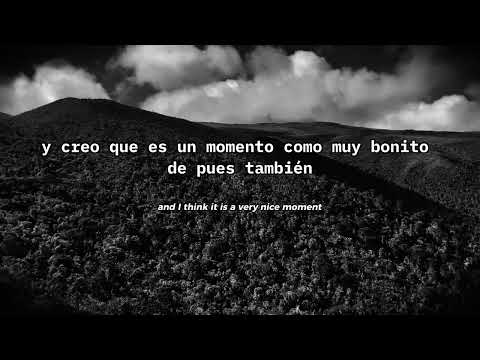
Páramos are high-altitude Andean ecosystems, shaped by water, wind, altitude, heat, and cold, that play a crucial role in the provision of water in Colombia
Páramos are high-altitude Andean ecosystems, shaped by water, wind, altitude, heat, and cold, that play a crucial role in the provision of water in Colombia
Yet páramos are more than a resource. In our project, we approach the páramo as a highly complex socioecological system in which artists, farmers, researchers, multinational extractive industries, cows, birds, water, clouds, wind, frailejones [emblematic plants of the páramos], and the city meet.
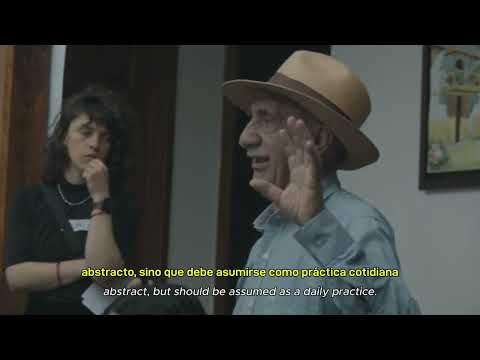
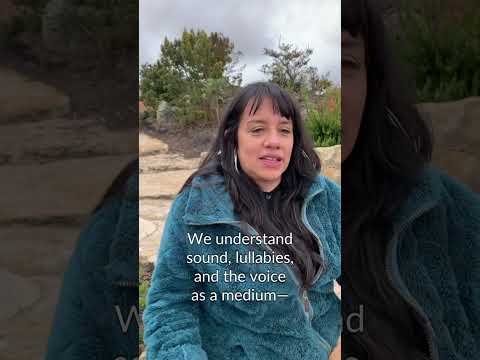
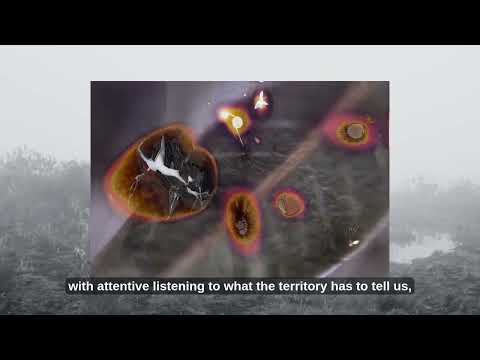
We choose to make our first encounter with the páramo at the Estación de Escucha de Alta Montaña in the Sumapaz páramo, south of Bogotá, a biocultural centre that develops and promotes relational listening practices as a working method. Operating on somatic, spiritual, and social levels, these practices seek to foster interactions, from an affective perspective, between humans and the other beings that inhabit the páramo. In this encounter, we engage in dialogue with the páramo through sound. Not in the way our species often does, by imposing its own voice, but quite the opposite: by listening attentively, opening our ears to other forms of communication beyond human language, and entering into exchange with the sounds the páramo offers us, moment by moment.
In this way, the Sumapaz páramo reveals itself as a field of relations where multiple forms of existence converge. The curatorial gesture we present here is situated at this intersection and proposes a device of co-presence between what sounds and what erupts, between what persists and what transforms.
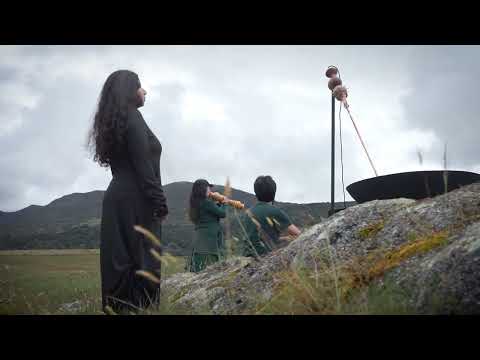
Inside the station, the live set is understood as a situated intervention: acoustic instruments, electronic devices, and artefacts designed by Leonel Vásquez activate a layer of listening that does not seek to represent the outside, but to enter into dialogue with it. At the centre of the listening station stands a large installation called the water flute. This installation constantly reminds us of the importance of a sacred element to which we have lost reverence, and whose crisis today affects many territories: water.
Mediated by microphones open to the landscape, outside of the station a second sonic layer emerges in which the wind moves through the scene like a breath. Around it, birds trace lines in the air, while cows and dogs add domestic rhythms that make cohabitation between the human and the no human audible. These “natural” sounds mix with the engines of motorbikes, cars, and trucks, voices carried by the wind, and radios. The sonic landscape of the páramo thus appears not as an idyll, but as a surface of friction where the natural, the ancestral, and the contemporary coexist.
In this way, we establish a conversation between the inherent—the sonic landscape of the páramo—and the incidental—our sonic intervention. Thus, we make visible the tension between inhabiting and transforming a territory, a tension that defines the human relationship with the world.
However, there is something essential to hold at all times: what matters most is not what we have to say or express, not even among ourselves, but listening, the economy of sound, and the willingness to let what the páramo tells us give rise to our response.
Lo Que Suena, Lo Que Interrumpe - Dialogando Con El Páramo
Los páramos son ecosistemas andinos de alta montaña, modelados por el agua, el viento, la altura, el calor y el frío, que desempeñan un papel crucial en la provisión de agua en Colombia. Sin embargo, los páramos son más que un recurso. En nuestro proyecto, abordamos el páramo como un sistema socioecológico altamente complejo en el que se encuentran artistas, campesinos, investigadores, industrias extractivas multinacionales, vacas, aves, agua, nubes, viento, frailejones [plantas emblemáticas de los páramos] y la ciudad.
Elegimos realizar nuestro primer encuentro con el páramo en la Estación de Escucha de Alta Montaña, en el páramo de Sumapaz, un biocentro cultural que desarrolla y promueve prácticas de escucha relacional como método de trabajo. Operando en los niveles somático, espiritual y social, estas prácticas buscan fomentar interacciones, desde una perspectiva afectiva, entre los humanos y los otros seres que habitan el páramo. En este encuentro, dialogamos con el páramo a través del sonido. No como suele hacerlo nuestra especie, imponiendo su voz, sino todo lo contrario: escuchando atentamente, abriendo nuestros oídos a otras formas de comunicación más allá del lenguaje humano y entablando un intercambio con los sonidos que el páramo nos ofrece, momento a momento.
De este modo, el páramo de Sumapaz se revela como un campo de relaciones donde convergen múltiples formas de existencia. El gesto curatorial que aquí presentamos se sitúa en esa intersección y propone un dispositivo de co-presencia entre lo que suena y lo que irrumpe, entre lo que persiste y lo que se transforma.
Dentro de la estación, el set en vivo se entiende como una intervención situada: instrumentos acústicos, dispositivos electrónicos y artefactos diseñados por Leonel Vásquez activan una capa de escucha que no busca representar el afuera, sino entrar en diálogo con él. En el centro de la estación de escucha se erige una gran instalación llamada “flauta de agua”. Esta instalación nos recuerda constantemente la importancia de un elemento sagrado al que hemos perdido reverencia y cuya crisis afecta hoy a muchos territorios: el agua.
Mediada por micrófonos abiertos al paisaje, fuera de la estación emerge una segunda capa sonora en la que el viento atraviesa la escena como una respiración. A su alrededor, las aves trazan líneas en el aire, mientras vacas y perros añaden ritmos domésticos que hacen audible la cohabitación entre lo humano y lo no humano. Estos sonidos “naturales” se mezclan con motores de motos, autos y camiones, voces desplazadas por el viento y radios. El paisaje sonoro del páramo aparece así no como un idilio, sino como una superficie de fricción donde lo natural, lo ancestral y lo contemporáneo coexisten.
De este modo, establecemos una conversación entre lo inherente —el paisaje sonoro del páramo— y lo incidental —nuestra intervención sonora—. Así, hacemos visible la tensión entre habitar y transformar un territorio, una tensión que define la relación humana con el mundo.
Sin embargo, hay algo esencial que sostener en todo momento: lo más importante no es lo que tenemos por decir o expresar, ni siquiera entre nosotros, sino la escucha, la economía del sonido y la disposición a dejar que aquello que el páramo nos dice dé origen a nuestra respuesta.