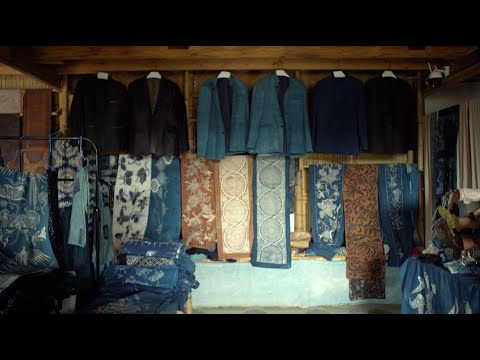
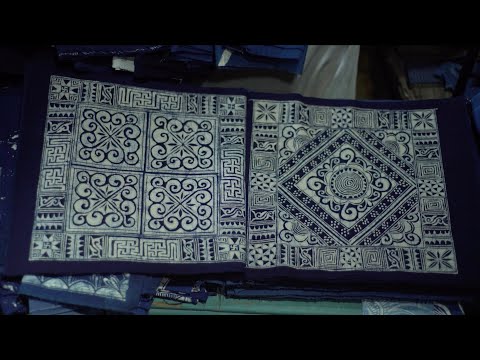
The Making of the Festive Attire
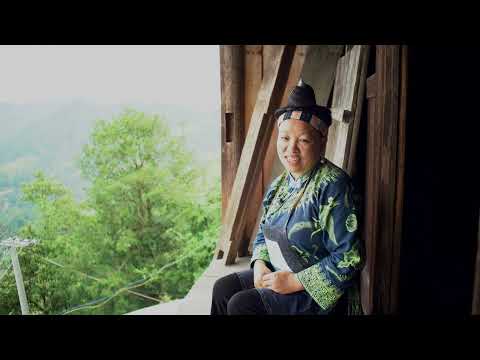
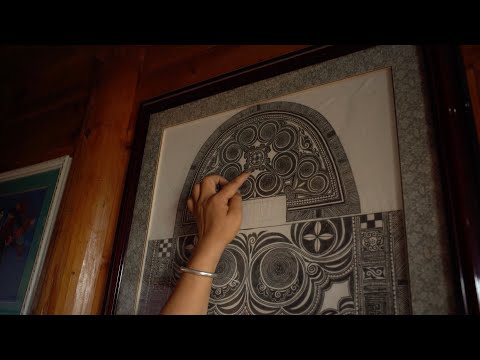
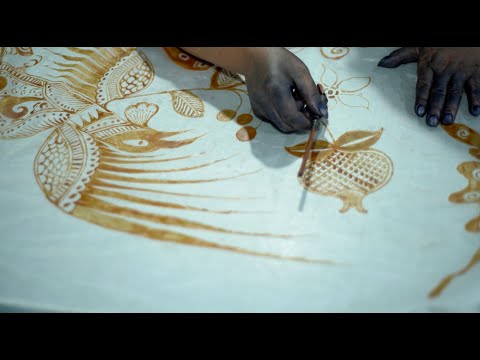
In Paimo village, I met Madam Wang, who has long specialized in drawing traditional batik patterns for festive attires and making these garments as her livelihood
In Paimo village, I met Madam Wang, who has long specialized in drawing traditional batik patterns for festive attires and making these garments as her livelihood
She showed me her own festive attire, including one made by her mother more than a hundred years ago.
Sizing makes the fabric stiffer and smoother, which makes it easier to draw batik patterns. For this, she uses konjac powder. Konjac is a root vegetable widely grown in Asia, known for its starchy corm. In daily life, konjac is also used as food. Madam Wang used to make the paste from the konjac block by herself, but nowadays it is available ready-made powder at the local market.
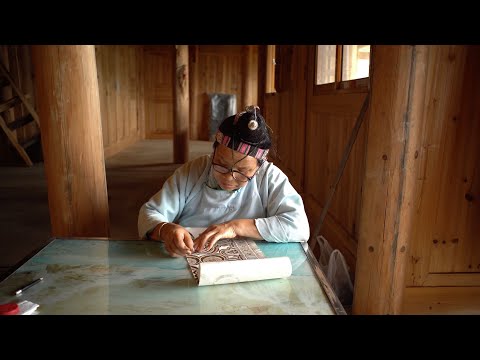
In the past, she also wove her own cloth by hand, whereas today machine-woven fabric is commonly used. After sizing, the fabric is dried in the sun, then polished with a horn or bone (she uses a buffalo’s jawbone). Nowadays, this polishing step is often done by machine, but she demonstrated to me how it used to be done by hand.
Each stage of the process takes time and requires countless repeated movements.