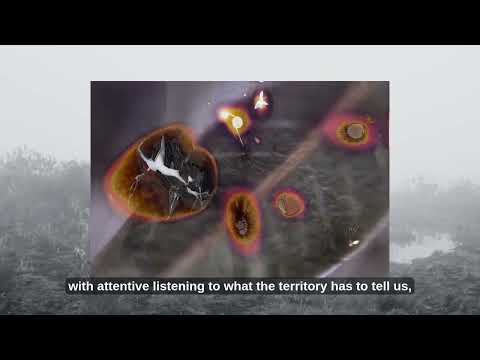
An Encounter With the Past-Present at the Siecha Lagoons

We continue walking through and unraveling the different relations and layers that shape the socioecological system of the páramo and take a look into the past in order to better understand our present
We continue walking through and unraveling the different relations and layers that shape the socioecological system of the páramo and take a look into the past in order to better understand our present
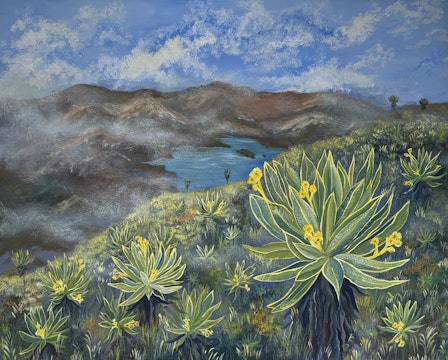
The three Siecha Lagoons located in the páramo of Chingaza at 3,700 m.a.s.l., hold many stories, of which we want to share a glimpse here.
For the Muisca people, the lagoons represented a space of transition: between the mountain and the sky, between solid ground, suspended water and mist, between what is reachable and what remains unavailable. They gave the lagoons the name Siecha, meaning “men of water.” Rituals and offerings to Sie, the goddess of water, were carried out there, including offerings of gold objects.
From the Siecha Lagoon, imaginary lines were also traced, connecting it with the sunset during the solstice and the equinox. Along these lines, several towns of the Cundiboyacense high plateau were located: Chía, Cota, La Calera, Bacatá and Suesca, among others. Today, in these towns and cities, we find Catholic churches in the places where the Muisca once honored water, wind, clouds and earth.
Attracted by the legend of El Dorado, which spoke of gold in the lagoons, the Spaniards tried to drain them in search of it. In that process, the lagoons lost part of their original water level.
Walking toward the Siecha Lagoons today is approaching a space where this past remains present in the water, in the mist, and in the traces of history.
Un Encuentro Con El Pasado-Presente en Las Lagunas de Siecha
Seguimos recorriendo y desenredando las distintas relaciones y capas que conforman el socioecosistema del páramo y miramos hacia el pasado para entender mejor nuestro presente.
Las tres Lagunas de Siecha, están ubicadas en el páramo de Chingaza, a 3700 m.s.n.m., guardan muchas historias, de las cuales queremos compartir aquí un pequeño vistazo.
Para el pueblo muisca las lagunas representaron un espacio de transición: entre la montaña y el cielo, entre la tierra firme, el agua suspendida y la neblina, entre lo alcanzable y lo indisponible. Les dieron a las lagunas el nombre de Siecha, “hombre de agua”. Allí se realizaban rituales y ofrendas a Sie, la diosa del agua, entre ellas objetos de oro.
Desde la Laguna de Siecha se trazaban también líneas imaginarias que conectaban con la puesta del sol durante el solsticio y el equinoccio. Sobre estas líneas se ubicaban varios pueblos del altiplano cundiboyacense: Chía, Cota, La Calera, Bacatá y Suesca, entre otros. Hoy, en estos pueblos y ciudades, encontramos iglesias católicas en los lugares donde antes los muiscas honraban el agua, el viento, las nubes y la tierra.
Atraídos por la leyenda de El Dorado, que hablaba del oro guardado en las lagunas, los españoles intentaron drenarlas en su búsqueda. En ese proceso, perdieron parte de su nivel original de agua.
Caminando hoy hacia las lagunas de Siecha es acercandose a un espacio donde este pasado sigue presente en el agua, en la niebla, y en las huellas de la historia.